Student-run non-profit · Chicago, IL

Learn. Inspire. Teach.

LitBridge closes educational gaps by connecting K–5 students in underserved Chicago communities with passionate high school volunteers — building literacy, confidence, and a lifelong love of reading.

Enroll a Student Become a Volunteer
0
Grades served (K–5)
Free
Always free
0
% Student-run
Our Approach

Multicultural Curriculum

Texts that reflect every student's background and build a genuine love of reading.

Mentorship Model

High school volunteers who build empathy and purpose across Chicago communities.

Suburban–Urban Bridge

Connecting students across community lines to build understanding and opportunity.

The Literacy Crisis

The numbers are
impossible to ignore.

Millions of American children are heading into middle school without the reading skills they need to succeed. The data below is not from a distant era — it is from 2024.

Nationwide
0%
of 4th graders do not read proficiently
Nation's Report Card (NAEP), 2024
  • Only 31% of U.S. 4th graders meet NAEP reading proficiency standards — down from 35% in 2019
  • 40% of 4th graders score below the "Basic" level — the worst share since 2002
  • Students at the lowest performance levels posted their worst reading scores in over 30 years
  • 54% of U.S. adults read below a 6th-grade level
Illinois
0%
of Illinois 4th graders are not proficient readers
NAEP 2024 — Illinois ranked 29th nationally, down from 17th in 2022
  • Illinois joined 40 other states where 1-in-3 or fewer 4th graders meet reading standards
  • Only 41% of Illinois grades 3–8 students meet statewide reading proficiency (IAR 2024) — still below national peers in many categories
  • A 30-point racial gap separates Black and white students' proficiency — unchanged since 2019
  • Illinois dropped from the top half to the bottom half of states in just two years
Chicago
0%
of CPS students in grades 3–8 do not read at grade level
Illinois Report Card, 2024
  • Only 23% of Chicago 4th graders reached NAEP reading proficiency in 2024
  • Just 22.6% of Black students and 25.5% of Hispanic students in CPS grades 3–8 read proficiently
  • Only 1 in 4 Chicago 11th graders reads at grade level
  • 40.8% of CPS students were chronically absent in 2024 — compounding the crisis

"Students who do not 'learn to read' during the first three years of school experience enormous difficulty when they are subsequently asked to 'read to learn.' If a student struggles to read at grade level by the end of third grade, up to half of the printed fourth-grade curriculum becomes incomprehensible."

— National Center to Improve the Tools of Educators, cited by the Annie E. Casey Foundation
3rd grade
is the critical threshold. A student who can't read proficiently by end of 3rd grade is 4× more likely not to graduate high school on time.
70%
of low-income 4th graders cannot read at a basic level — nearly double the rate of higher-income peers.
$2.2T
estimated annual economic cost of low literacy in the U.S. — in lost productivity, increased healthcare use, and higher incarceration rates.
+5pts
decline in national 4th grade reading scores since 2019 — the steepest drop since the assessment began in 1992.

This is why LitBridge exists.

Every child we reach before 3rd grade is a child whose trajectory we can change. This work is urgent — and it starts now.

Volunteer with Us Make a Donation

Sources: NAEP Nation's Report Card 2024 (nationsreportcard.gov) · Illinois Report Card 2024, Illinois State Board of Education · Illinois Policy Institute, 2024–2025 · National Literacy Institute 2024–2025 · Annie E. Casey Foundation · National Center to Improve the Tools of Educators

What We Do

Closing the literacy gap,
one student at a time.

A student-run non-profit providing free tutoring to K–5 students in underserved Chicago communities, guiding them through reading skills while exposing them to diverse, multicultural texts.

01

Proactive Curriculum

We don't wait for students to fall behind. Our structured program gets ahead of learning gaps before they widen — not after.

02

Cultural & Community Pedagogy

Every text and lesson reflects the communities we serve. Students see themselves in what they read — that's the whole point.

03

Holistic Ecosystem Empowerment

We empower students, volunteers, families, and schools together — building a full ecosystem of support around every learner.

04

Suburban–Urban Partnership

Our model intentionally bridges Chicago communities, creating meaningful relationships that benefit everyone equally.

Every child deserves to love reading.

Our proactive model ensures no student is left behind — before the gap becomes a canyon.

Chicago Public Schools Partnership

Working directly with CPS to reach the students who need literacy support the most.

A curriculum built around every child.

Each grade level gets a tailored approach — phonics, fluency, comprehension, and culturally relevant texts — with strategies proven to accelerate reading growth.

K

Sample 45-Min Session

Phonemic Awareness & Print Concepts
  • 1
    Warm-Up: Rhyme Time (5 min)

    Volunteer and student brainstorm rhyming word families together. Builds phonemic awareness through play.

  • 2
    Letter Sound Review (8 min)

    Review 3 target letters using picture-word cards. Student points, names, and repeats the sound in isolation.

  • 3
    Shared Reading (15 min)

    Volunteer reads aloud expressively; student tracks text with finger. Pause to ask predictive questions.

  • 4
    Sight Word Practice (10 min)

    Flashcard drill for 5 high-frequency words. Use "Say it, Spell it, Write it, Use it in a sentence."

  • 5
    Wrap-Up: Draw the Story (7 min)

    Student draws their favorite part of the book and explains it aloud — building comprehension and oral language.

📖
Featured Text: Last Stop on Market Street Matt de la Peña · Culturally affirming, community-focused

Key Strategies for Kindergarten

Phonemic Awareness
Help students hear and manipulate sounds in words — not yet reading letters, just listening. Tap syllables on fingers, blend sounds aloud (c-a-t → cat), segment words into phonemes. Keep it rhythmic and playful. 💡 Tip: Clapping syllables to student's name builds early phonemic awareness instantly.
Print Concepts
K students learn that print carries meaning: left-to-right tracking, top-to-bottom, return sweep. Point to each word as you read. Ask: "Where does this sentence start?" Reinforces that reading is a skill — and a code they're learning to crack. 💡 Tip: Let the student "be the teacher" and point for you.
Sight Word Automaticity
Dolch Pre-Primer words (the, a, and, I, it...) should become automatic — no sounding out required. Use multi-sensory methods: trace letters in sand, build with letter tiles, find the word hidden in a text. Spaced repetition beats massed practice every time. 💡 Tip: Keep a personal "Word Wall" notebook the student decorates.
Oral Language Development
Strong readers start as strong speakers. Use "turn and talk," open-ended questions, and story retelling. Ask "Why do you think the character did that?" rather than "What happened next?" — this builds inferential thinking early. 💡 Tip: Repeat and expand the student's answer to model richer vocabulary.
1–2

Sample 45-Min Session

Decoding, Fluency & Basic Comprehension
  • 1
    Word Family Warm-Up (5 min)

    Build word families on a whiteboard: -ight, -ack, -ame. Student spins a wheel and reads the word. Builds decoding speed.

  • 2
    Re-read for Fluency (10 min)

    Student re-reads a familiar leveled text (aim for 95%+ accuracy). Volunteer models phrasing, then student echoes with expression.

  • 3
    New Text Introduction (12 min)

    Preview new book: title, pictures, tricky words. Student reads first; volunteer steps in only when stuck for 3+ seconds.

  • 4
    Comprehension Check (10 min)

    Retell using "First… Then… Finally…" framework. Ask one "why" and one "how" question. Chart new vocabulary words.

  • 5
    Word Study & Close Out (8 min)

    Sort 8 words by vowel sound or pattern. Add 2 new words to personal dictionary. Set a "reading challenge" for the week.

📗
Featured Text: Each Kindness Jacqueline Woodson · Social-emotional, community themes

Key Strategies for Grades 1–2

Decoding Strategies (MSV)
Teach three cross-checking strategies: Meaning (does it make sense?), Structure (does it sound right?), Visual (does it look right?). When a student miscues, prompt: "You said ___. Does that make sense? Look at the first letter." 💡 Tip: Praise the attempt, then guide — never just correct and move on.
Phrased Reading for Fluency
Fluency is rate + accuracy + expression. Use echo reading (volunteer reads a phrase, student repeats), paired reading (read in unison), and performance reading (read aloud as if telling a story). Target 60–90 WCPM (words correct per minute) for end of Grade 2. 💡 Tip: Record student on a phone — hearing themselves improves self-monitoring.
Vocabulary in Context
Don't pre-teach every word — teach students to use context clues. When encountering an unfamiliar word: read the sentence before and after, look for picture clues, substitute a word that makes sense, then confirm. Builds independent word-solving habits. 💡 Tip: "Juicy words" journals — students collect 5 new words per session with illustrations.
3–4

Sample 45-Min Session

Comprehension Strategies & Text Structure
  • 1
    Quick Discussion Hook (5 min)

    Pose a real-world connection question tied to the reading: "Have you ever felt like the main character?" Activates prior knowledge.

  • 2
    Guided Silent Reading (12 min)

    Student reads 3–4 pages silently. Volunteer listens as student reads 1 page aloud. Note miscues or self-corrections without interrupting.

  • 3
    Comprehension Strategy Focus (13 min)

    Choose one: summarizing, inferencing, or identifying text structure. Use a graphic organizer (cause-effect, compare-contrast, sequence).

  • 4
    Vocabulary Deep Dive (8 min)

    Pick 2 Tier 2 words (e.g., reluctant, determined). Explore synonyms, antonyms, root words. Act out and use in original sentences.

  • 5
    Written Response (7 min)

    Student writes 3–4 sentences responding to a text-dependent question using a sentence stem. Builds evidence-based writing skills.

📘
Featured Text: Front Desk Kelly Yang · Immigration, identity, resilience

Key Strategies for Grades 3–4

Inferencing ("Reading Between the Lines")
Authors don't spell everything out — readers must infer. Use the formula: Text clue + What I know = Inference. Ask "What is the author suggesting here but not saying directly?" Practice with picture books first, then chapter books. Graphic organizers help. 💡 Tip: "I think __ because the text says __ and I know __" is a powerful sentence frame.
Text Structure (Non-Fiction)
Teach the 5 expository text structures: description, sequence, compare-contrast, cause-effect, problem-solution. Signal words unlock structure: "however" signals compare-contrast; "as a result" signals cause-effect. Use the structure to summarize more efficiently. 💡 Tip: Keep a signal-word anchor chart visible during every nonfiction session.
Close Reading
Return to the same short passage 2–3 times with a different lens each time: first for general understanding, second for vocabulary and word choice, third for author's craft or deeper meaning. This is how strong readers interact with challenging text — not through skimming. 💡 Tip: Short texts (1 paragraph) beat long passages for close reading with K–5 students.
5

Sample 45-Min Session

Critical Thinking, Author's Purpose & Discussion
  • 1
    Socratic Opener (7 min)

    Open-ended discussion question from the previous session's reading. Student defends a point of view using text evidence. No right answers.

  • 2
    Independent Reading + Think-Aloud (10 min)

    Student reads silently; volunteer models a think-aloud on 1–2 paragraphs: "I'm confused here because…" or "This connects to…"

  • 3
    Author's Purpose & Craft (12 min)

    Analyze why the author made specific word choices or structural decisions. "Why does this chapter start with a flashback?" Builds literary analysis skills.

  • 4
    Tier 3 Vocabulary (8 min)

    Content-area and domain-specific words. Use morphological analysis (prefix + root + suffix). Build academic vocabulary for middle school readiness.

  • 5
    Written Argument (8 min)

    Student writes a claim + 2 pieces of text evidence using the RACE framework (Restate, Answer, Cite, Explain). Prepares for 6th grade writing demands.

📙
Featured Text: The Only Road Alexandra Diaz · Immigration, courage, cultural identity

Key Strategies for Grade 5

Think-Aloud Metacognition
Model your own thinking as you read: "I'm picturing this scene as…" or "I need to re-read that — I lost the thread." Students learn that confusion is normal and re-reading is a strategy — not a failure. Makes the invisible act of reading visible and learnable. 💡 Tip: Use sticky notes to track thoughts while reading — builds annotation habits.
Author's Purpose (PIE + RAFT)
PIE framework: authors write to Persuade, Inform, or Entertain. RAFT helps students understand Role, Audience, Format, Topic. Ask "Who is this author writing for and why?" This builds critical reading that extends beyond ELA to every subject. 💡 Tip: Compare two texts on the same topic with different purposes — the contrast illuminates everything.
Evidence-Based Discussion
Move from IRE (Initiate-Respond-Evaluate) to genuine Socratic dialogue. Use accountable talk stems: "I agree with __ because…" / "I want to add to what __ said…" / "The text says __ which suggests…" This builds the academic language that 6th grade — and beyond — demands. 💡 Tip: Sentence frames posted visibly reduce anxiety and increase participation dramatically.

Want the full curriculum guide?

Volunteers receive our complete session guides, text lists, and strategy cards during training.

Become a Volunteer
How It Works

Four steps. One mission.

From enrollment to a lifelong love of reading — here's how every student moves through the LitBridge experience.

01

Identify & Enroll

We identify K–5 students across Chicago who need literacy support and enroll them in accessible, creative reading opportunities.

02

Connect Volunteers

Students are matched with high school volunteers in a mentorship model that fosters empathy and a shared sense of purpose.

03

Mentor & Read

Active mentoring, tutoring, and creative reading sessions guided by our proactive, culturally relevant core curriculum.

04

Build Confidence

The ultimate goal: confidence and a lifelong love for reading. Students rediscover the joy of books — and volunteers find the experience deeply rewarding.

Ready to make a difference in Chicago?

Join LitBridge as a student, volunteer, or donor — one book, one student, one community at a time.

Support LitBridge

Results that speak for themselves.

Every number below represents a student, a family, or a community we've had the privilege to serve. Here's what LitBridge has built so far.

Students reading at or above grade level after 1 semester 84%
Up from 31% at intake
Volunteer retention rate (semester to semester) 91%
Our volunteers stay because the mission matters
Families reporting improved home reading habits 78%
Based on parent/guardian surveys
Culturally relevant curriculum session completion 96%
Students are engaged because they see themselves in the stories
📚
0
Students
Served
🎓
0
Active
Volunteers
🏫
0
Partner
Schools
0
% Student-Run
Organization

Join us in the fight against the literacy crisis.

Through our in-person program, we foster community and create a transformative experience that empowers young Chicago students to write their own futures.

What we ask of our volunteers.

If you have heart and a few hours a week, you have what it takes.

  • Must be in 9th grade or older
  • Attend a short training session
  • Commit to at least 1 hour per week
  • Be patient, responsible, and respectful
Volunteer Now

What you'll gain from it.

Why Volunteer

Direct Impact on Youth Literacy

Make a measurable difference in a child's reading ability and confidence — from day one.

Leadership & Teaching Experience

Real mentoring and leadership skills that colleges and employers highly value.

Diverse, Supportive Community

Work alongside passionate peers from all across Chicago's communities and school districts.

Volunteer & Service Hours

Earn documented service hours that strengthen college applications and your résumé.

Access Our Curriculum

Our full multicultural literacy curriculum is available to all volunteers — proactive, culturally relevant, and designed to empower every student we work with.

View Curriculum

Ready to inspire the next generation?

Join student volunteers making a real difference in Chicago classrooms across the city.

Sign Up to Volunteer
About LitBridge

Finding inspiration in every turn.

A non-profit initiative designed to combat the literacy and numeracy crisis affecting underprivileged elementary school students across Chicago.

Built to go beyond reactive tutoring — for good.

Founded by Jeremy Fuller, a rising 11th grader at Glenbrook South High School, LitBridge delivers a proactive, culturally relevant core curriculum built on a unique suburban-urban partnership model.

Chicago Public Schools Partnership

Working directly with CPS to reach the students who need literacy support the most.

Sustainable Learning Ecosystem

A self-sustaining ecosystem of learning and community support built around every student.

Vision to Scale Digitally

Expanding impact through a digital platform eventually reaching students across Illinois.

"Ever since I was young, I have always wanted to help people. Growing up, I had many services, and many teachers doubted my abilities as a student. Despite my early struggles, I was eventually able to gain support from many teachers, who got me to where I am today. I want to give that same support to students who are unable to receive the quality education that everybody deserves."

Jeremy Fuller — Founder and Executive Director, LitBridge
Jeremy Fuller
Founder & Executive Director

Meet the Founder

Jeremy Fuller

Rising 11th Grader, Glenbrook South High School

"I started LitBridge because I believe every child deserves to love reading — and that young people have the power to make that happen."

Jeremy founded LitBridge after recognizing the stark literacy gap between the suburban schools he attended and the under-resourced communities just miles away in Chicago. Rather than waiting for systemic change, he built a student-powered solution — connecting high school volunteers with K–5 students in CPS schools through a structured, culturally affirming curriculum.

Under Jeremy's leadership, LitBridge has grown from an idea into an organization serving multiple Chicago schools, training 30+ volunteer tutors, and building a curriculum grounded in real literacy science.

30+
Volunteer tutors recruited
5
Partner schools
K–5
Grades served
2025
Year founded

Our executive team.

Dedicated high school students committed to making a real difference in Chicago communities.

Jeremy Fuller
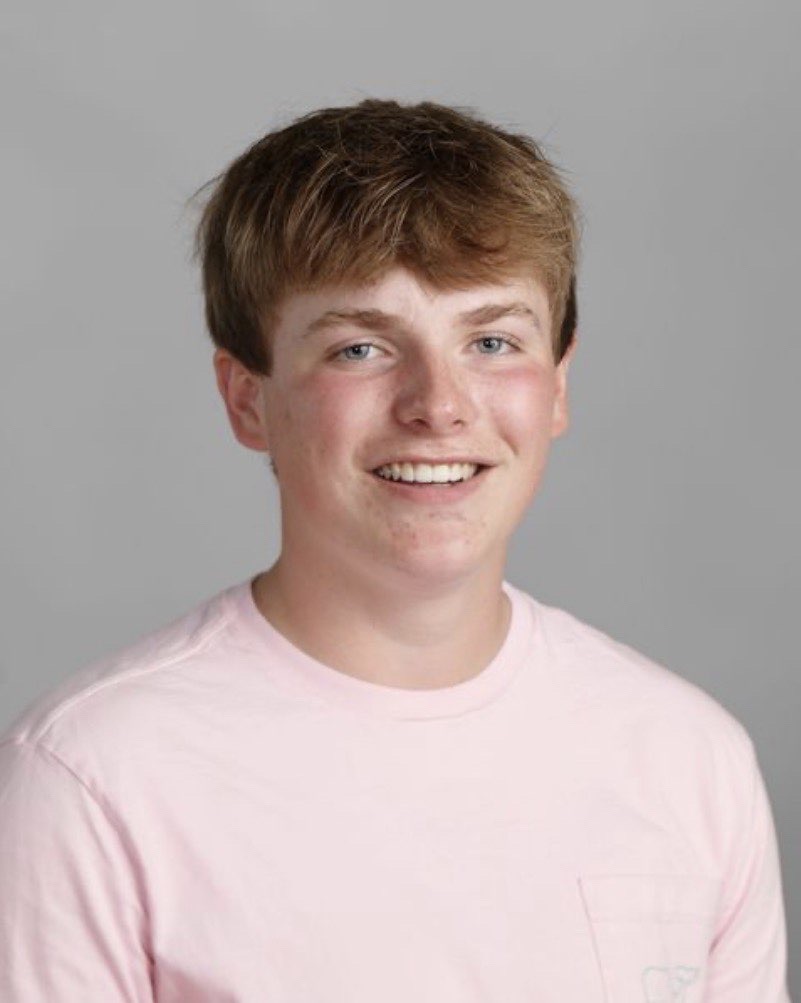
Founder

Jeremy Fuller

Executive Director
Owen Herrington
Leadership

Owen Herrington

Publicity Director
Daniel Yoon
Leadership

Daniel Yoon

Event Coordinator
Ahyan Ayub
Leadership

Ahyan Ayub

Technology Director
Claire Kim
Leadership

Claire Kim

Fundraising Director

Want to be part of the story?

Volunteer your time, enroll a student, or support our mission with a donation.

Get Involved Donate
Trusted By & Working With
🏫 Chicago Public Schools
🎒 Glenbrook South High School
📖 Chicago Public Library
🌆 City of Chicago DCFS
🎓 Glenbrook North High School
🤝 Northbrook Community Foundation
📚 Illinois Literacy Foundation
🏢 Chicago YMCA
🌱 CPS After School Matters

Want to bring LitBridge to your school or organization? Get in touch →

Voices from our community.

My daughter used to dread reading. After just a few months with LitBridge, she asks to read before bed every night. The volunteers are incredible — patient, kind, and so enthusiastic.

— Parent, West Side Chicago

Volunteering changed how I see my own education. These kids work so hard. Every session reminds me why literacy matters — and why we have to show up for each other.

— High School Volunteer, Evanston

LitBridge fills a gap that schools simply can't. The one-on-one attention and culturally relevant books make all the difference for our students. This is real community work.

— Classroom Teacher, CPS

Everything you need to know.

Have a question? We've answered the most common ones below. Can't find what you're looking for? Reach out to us.

Still have questions?

Whether you're a parent, prospective volunteer, educator, or donor — we're here to help. Our team responds within 24 hours.

Contact Us

Enrollment is free and open to K–5 students in Chicago's underserved communities. Fill out our sign-up form above or email us directly — our team will reach out within 48 hours to confirm placement and share your first session details.

Yes — 100%. Every session, every book, every resource is provided at absolutely no cost to students or their families. Our work is funded entirely by donors and community partners.

We currently serve students in grades K–5 (ages 5–11). Our curriculum is developmentally sequenced so that each student receives the right level of support regardless of where they are when they start.

Not at all. All volunteers receive a short training session before their first placement. We provide our full curriculum, session guides, and ongoing support — you just need to show up with patience and enthusiasm.

We ask for a minimum of 1 hour per week, plus the short onboarding training. Most volunteers find they enjoy their sessions so much that they naturally stay a bit longer — but there's no pressure to do more than you've committed to.

Yes. All LitBridge volunteers receive official documentation of their service hours, suitable for college applications, NHS, and extracurricular résumés. We're happy to write letters of recommendation for dedicated volunteers as well.

Every dollar goes directly to program operations — books and materials, volunteer training, school partnerships, and curriculum development. Donors who request it receive an impact report each semester showing exactly how their contribution was used.

We are actively pursuing our 501(c)(3) status. In the meantime, donations are managed with full transparency and accountability. We'll notify all current donors as soon as our tax-exempt status is confirmed.

Get Involved

Join the LitBridge community.

Whether you're a student, parent, educator, or supporter — there's a place for you here.